On biweekly pay, ten months have two paychecks and two months have three. Budget as if every month has two, and the extra two checks a year become money you planned for.
Step 1: Build your budget on two paychecks
Add up your fixed monthly bills, groceries and savings. Make sure two paychecks cover them. If they do not, your budget is relying on the third check, and the ten 2-paycheck months will feel tight.
Step 2: Find your 3-paycheck months
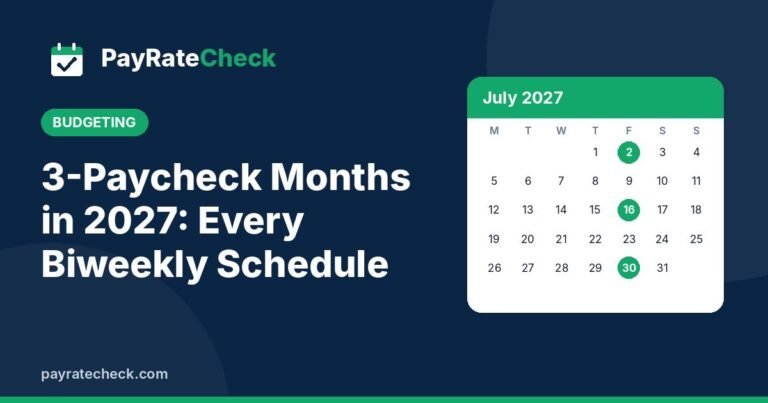
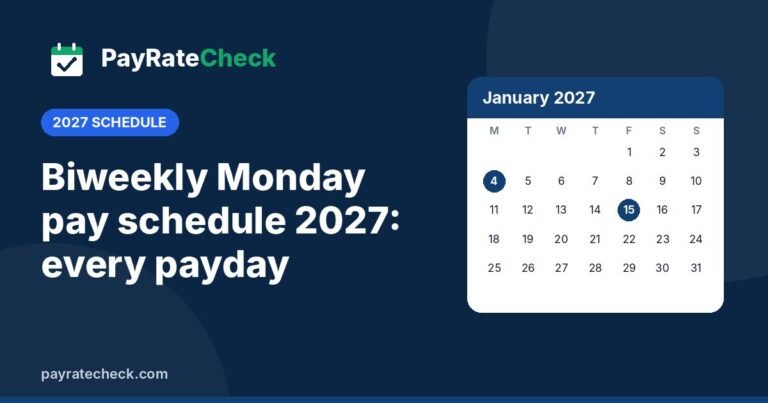
They depend on your payday. In 2027 they are July and December for Friday payrolls on the January 15 cycle and April and October for the January 8 cycle. See the full 2027 list.
Step 3: Give the third paycheck a job
Fill or top up an emergency fund (often 3 to 6 months of expenses).
Make an extra debt payment, starting with the highest interest rate.
Prepay a yearly bill such as car insurance or a subscription.
Fund a sinking fund for holidays, which matters when the extra check lands in December.
Step 4: Automate it
Set a recurring transfer to savings dated a day after the third payday, so the money moves before it is spent.
Use net pay, not gross
A gross paycheck of $2,000 is often about $1,500 to $1,650 take-home after taxes and benefits. Budget with your net pay from your pay stub.
Frequently asked questions
How many 3-paycheck months are there in a year?
Two for most biweekly schedules, three in a 27-paycheck year.